
NASA’s CYGNSS Transformed Earth Science by Creatively Tuning in to GPS Signals
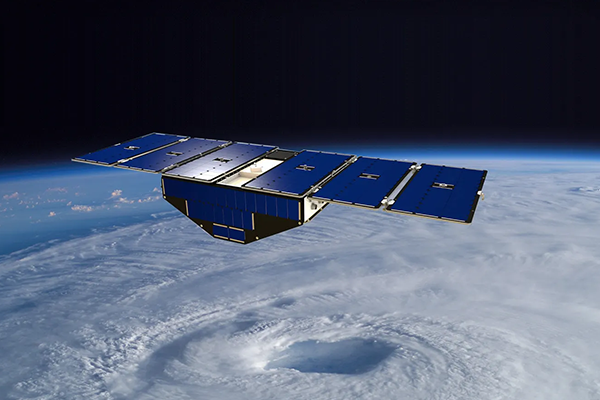
CYGNSS model
When NASA’s Cyclone Global Navigation Satellite System (CYGNSS) launched into orbit in 2016, none of the University of Michigan Engineers who developed the system expected it to transform earth science. They certainly had high hopes for the system’s original mission to improve hurricane forecasting, but its ability to pick up reflected GPS signals also proved useful for so much more.
NASA’s SunRISE SmallSats Ace Tests, Moving Closer to Launch

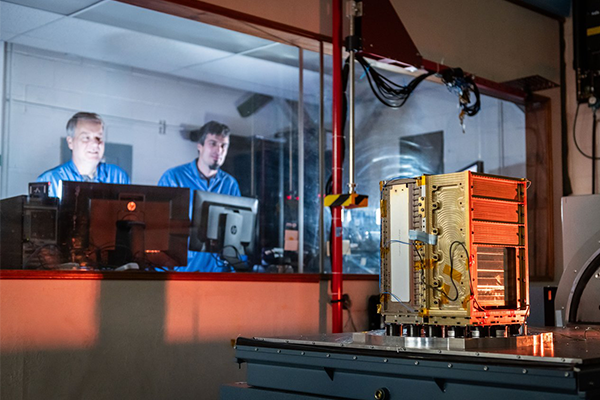
SUNRISE tests
In a mission led by Principal Investigator Professor Sue Lepri, Ph.D., who works as the Director of the Space Physics Research Laboratory, six small satellites (or SmallSats) are moving closer to launch in the Sun Radio Interferometer Space Experiment (SunRISE) Mission. Under the management of NASA’s Jet Propulsion Laboratory, this mission will study the physics of explosions in the Sun’s atmosphere in order to gain insights that could one day help protect astronauts and space hardware from showers of accelerated particles.

Could One of Jupiter’s Moons Support Alien Life? U-M Scientists Are on the Case

Europa Clipper
NASA’s Europa Clipper, the organization’s latest mission to Jupiter’s system of moons, launched from Florida’s Kennedy Space Center. It’s the start of a grand journey to Europa, a moon that scientists believe has a salty ocean of water beneath its icy outer surface. When the spacecraft reaches its target in 2031, it will start collecting the data necessary for University of Michigan researchers to help determine whether the ocean could support life.