“Space Force Awards $45 Million to Universities for Propulsion and Power Research”

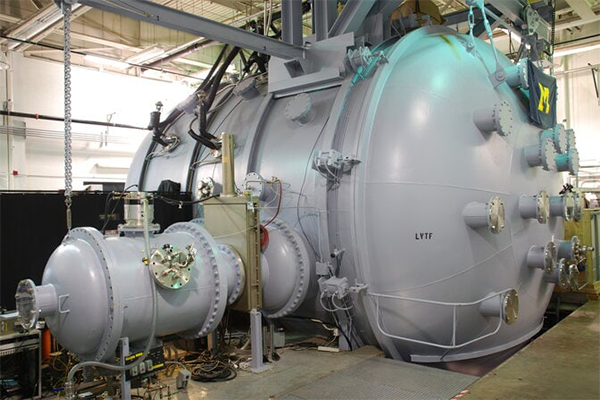
The University of Michigan was featured in “Space Force Awards $45 Million to Universities for Propulsion and Power Research” for SpaceNews. The U.S. Space Force awarded nearly $45 million to the Rochester Institute of Technology and the University of Michigan to spearhead advanced research in space power and propulsion. | September 16, 2024

“USSF Announces Selections for Advanced Space Power, Propulsion Research”

The University of Michigan was featured in “USSF Announces Selections for Advanced Space Power, Propulsion Research” for United States Space Force News. The United States Space Force, in partnership with the Air Force Research Laboratory, selected Rochester Institute of Technology and University of Michigan to lead the USSF University Consortium/Space Strategic Technology Institute Continue Reading »

In Six New Rogue Worlds, Webb Telescope Finds More Star Birth Clues

stars
An international collaboration that included the University of Michigan has spotted six likely rogue worlds—objects with planetlike masses but untethered from any star’s gravity—using the James Webb Space Telescope, or JWST. The discovery includes the lightest rogue planet candidate ever identified with a dusty disk around it. The elusive objects offer new evidence that the same cosmic processes that give birth to stars may also play a common role in making objects only slightly bigger than Jupiter.

NASA Selects U-M Team to Develop Technologies to Enhance Artemis Missions

Xhab logo
NASA and the National Space Grant Foundation have selected several university teams to develop advanced and innovative design ideas that will help solve Artemis mission challenges, including the BLISS (Bioastronautics and Life Support System) team at the University of Michigan. The selections are part of the 2023-2024 Moon to Mars eXploration Systems and Habitation (M2M X-Hab) Academic Innovation Challenge sponsored by NASA’s Artemis Campaign Development Division.

Enduring the Fireball of Spacecraft Re-entry through Improved Radiative Heating Prediction

earth
When we think about space missions, our minds often drift to unforgettable moments from the Apollo missions, the Space Shuttle Orbiter, or blockbuster movies. Among the many lasting memories from these endeavors, the image of the spacecraft engulfed in fiery plasma before safely landing back on Earth may be the most significant, as it symbolizes a successful mission. At the University of Michigan Department of Aerospace Engineering, researchers are working to better understand the complex scientific and engineering efforts behind these awe-inspiring scenes to ensure our astronauts continue to get home safely.

MRover Brings Home Top Ten Finish in International Competition

rover
The University of Michigan Mars Rover Team (MRover) team took home a ninth place win at this year’s University Rover Challenge (URC) which took place over the weekend of May 29 at the Mars Desert Research Station (MDRS). The top ten finish was a cause for celebration for the team after a major setback last August, 2023, when the team lost all of their tools and equipment in a fire, forcing them to restart late into their design cycle.