
By Khanh Nguyen
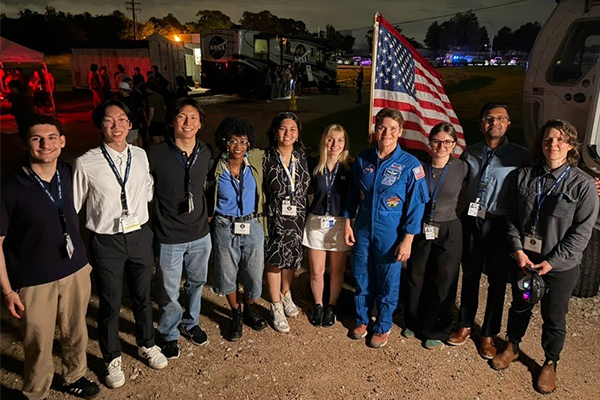
The University of Michigan’s Collaborative Lab for Advancing Work in Space (CLAWS) was one of ten finalist teams selected for the NASA SUITS Challenge in May at the Johnson Space Center in Houston. The team showcased their project GEMINI (Guided EVA Mission Infrastructure for Navigation Insight), and became the only finalist to receive a direct evaluation from NASA astronaut Anne McClain.
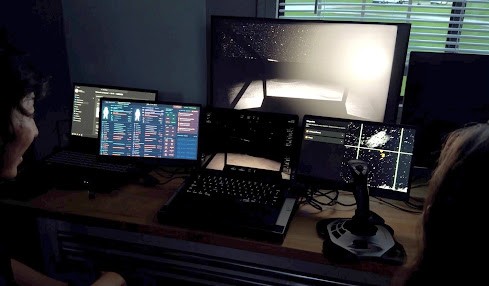
The NASA SUITS Challenge invites university teams to develop augmented reality systems that assist astronauts during extravehicular activities (EVAs). Building on NASA’s Artemis campaign, the 2026 challenge focused on preparing astronauts for future Mars missions, where student-developed systems were evaluated on usability, technical performance and mission impact.
CLAWS is a multidisciplinary student organization at the University of Michigan composed of approximately 60 students spanning engineering, computer science, business, information, and other disciplines. Throughout the academic year, software developers, AI researchers, hardware engineers, UX designers and business members worked together to develop GEMINI with feedback from NASA design evaluators.
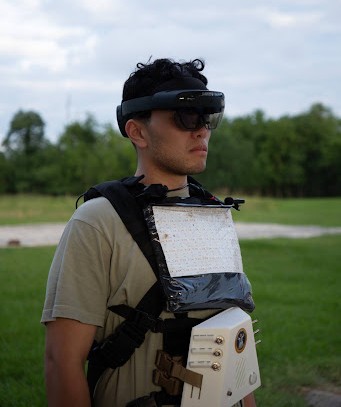
GEMINI, an augmented reality platform built on the Microsoft HoloLens 2 combines AR, AI, and real-time mission data into a single interface. Designed to reduce astronaut workload, GEMINI provides navigation guidance, suit telemetry, mission procedures, task management, and voice-controlled communication with mission control.
A defining feature of GEMINI is its integrated AI assistant. CLAWS developed custom machine learning models capable of interpreting natural language, identifying astronaut intent, and extracting mission-critical information from voice commands. The system also extends to the Pressurized Rover (PR), where AI-powered path planning, LiDAR-based obstacle detection, and predictive resource monitoring help improve navigation and safety.
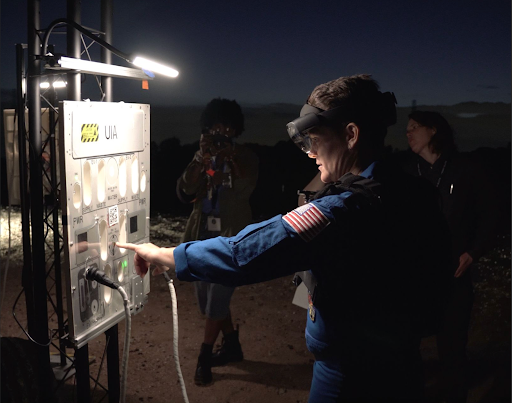
After successfully demonstrating both the team’s augmented reality system and custom suit peripherals, CLAWS was selected on the final day of testing as the only team to have its technology evaluated by NASA astronaut Anne McClain.
McClain gave positive feedback on GEMINI’s intuitive user interface, overall user experience, and AI-powered voice recognition.
The team’s success at the 2026 NASA SUITS Challenge reflects the University of Michigan’s commitment to interdisciplinary innovation and experiential learning. By combining expertise from across disciplines to solve real-world challenges in human spaceflight, CLAWS continues to demonstrate how student-led research can help shape the future of work in space.