We Need a Solar Sail Probe to Detect Space Tornadoes Earlier, More Accurately, U-M Researchers Say

solar sail
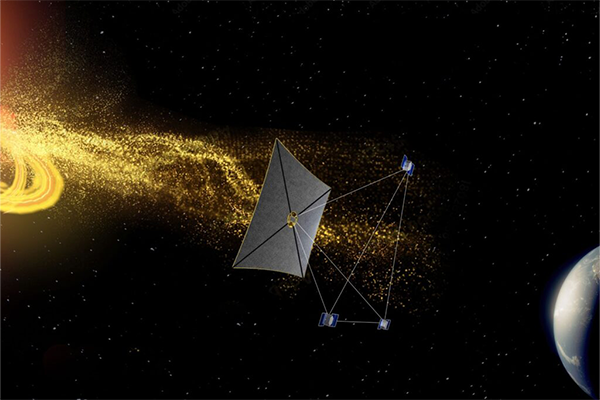
Spirals of solar wind can spin off larger solar eruptions and disrupt Earth’s magnetic field, yet they are too difficult to detect with our current single-location warning system, according to a new study from the University of Michigan. But a constellation of spacecraft, including one that sails on sunlight, could help find the tornado-like features in time to protect equipment on Earth and in orbit.

The People Behind SPAR: Tate Gill

PEPL
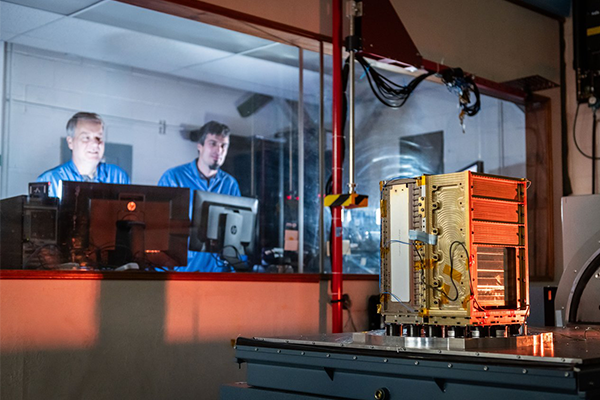
Tate Gill, an assistant research scientist within the Plasmadynamics and Electric Propulsion Laboratory (PEPL), has taken on the technical leadership role as head of the institute’s propulsion division. Since receiving a $35 million award from the USSF University Consortium in late 2024, the University of Michigan has continued to lead one of the nation’s largest efforts to advance space power and propulsion through Space Power and Propulsion for Agility, Responsiveness and Resilience (SPAR) Institute.

Professors from U-M Law and U-M Aerospace Co-Instruct Course on Removing Space Debris

PSI
The Problem Solving Initiative (PSI) course series, where students from a variety of academic backgrounds come together and learn how to collaborate and solve problems, recently drew its latest iteration to a close with an end-of-semester presentation and forum. This semester’s PSI was co-taught by U-M Law School Professor Donald Moore and U-M Aerospace Engineering Assistant Professor Oliver Jia-Richards and covered the topic of how to handle and remove debris from space.