Smithsonian National Air and Space Museum Features CYGNSS Mission Led by University of Michigan

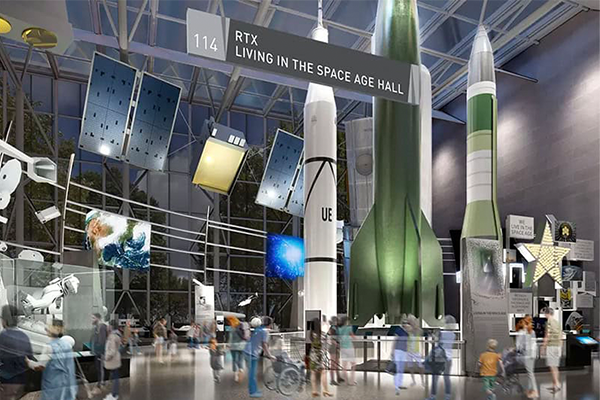
RTX Space Age Exhibit
The CYGNSS Mission led at the University of Michigan will be exhibited in the Smithsonian National Air and Space Museum in July. The museum will feature a replica of NASA’s CYGNSS mission in the “RTX Living in the Space Age Hall.” Named the Cyclone Global Navigation Satellite System, CYGNSS was developed at the University of Michigan’s Space Physics Research Laboratory (SPRL) and the Department of Climate and Space Sciences and Engineering (CLASP).

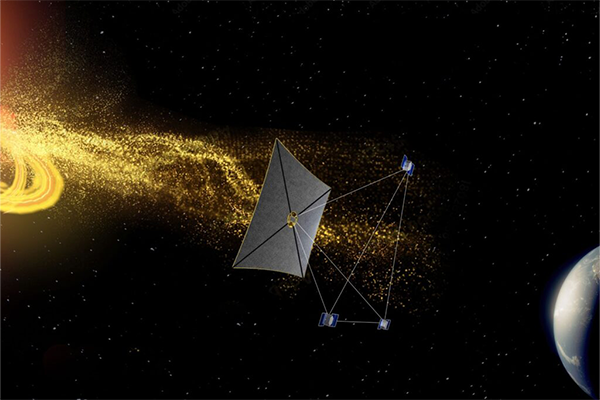
We Need a Solar Sail Probe to Detect Space Tornadoes Earlier, More Accurately, U-M Researchers Say

solar sail
Spirals of solar wind can spin off larger solar eruptions and disrupt Earth’s magnetic field, yet they are too difficult to detect with our current single-location warning system, according to a new study from the University of Michigan. But a constellation of spacecraft, including one that sails on sunlight, could help find the tornado-like features in time to protect equipment on Earth and in orbit.

The People Behind SPAR: Tate Gill

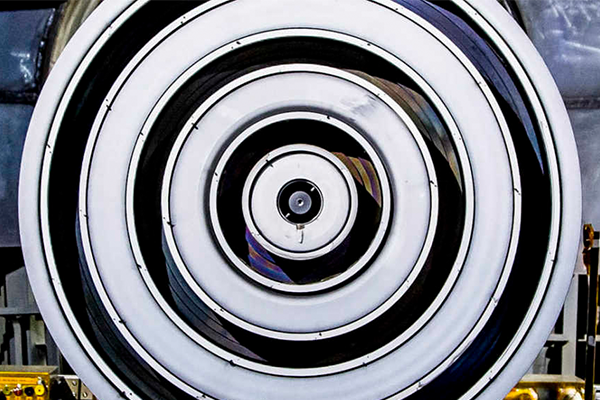
PEPL
Tate Gill, an assistant research scientist within the Plasmadynamics and Electric Propulsion Laboratory (PEPL), has taken on the technical leadership role as head of the institute’s propulsion division. Since receiving a $35 million award from the USSF University Consortium in late 2024, the University of Michigan has continued to lead one of the nation’s largest efforts to advance space power and propulsion through Space Power and Propulsion for Agility, Responsiveness and Resilience (SPAR) Institute.