Four faculty members in the Aerospace department received a START grant from Michigan Engineering. The project goal is to expand the environmental, emissions, and community impact considerations of the planning process for launch sites.
The NASA Science Mission Directorate, the Heising-Simons Foundation, and a group of mission experts have teamed up to make the mission development process more transparent and accessible to researchers, by offering the NASA PI Launchpad workshop.
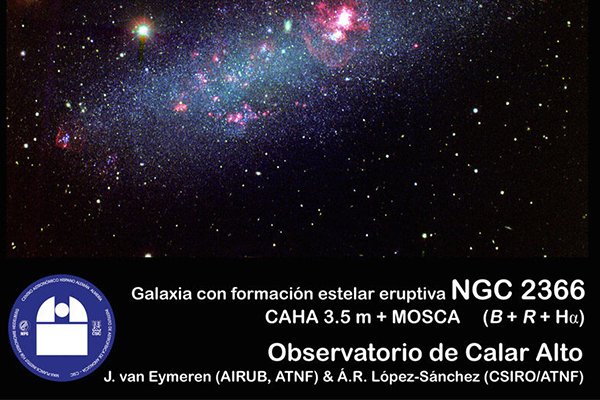
The Extremely Large Telescope could change everything we know about the Universe—including how the first galaxies were created and where life on other planets may exist. And U-M is the only U.S. university involved in helping develop it.
New information about an emerging technique that could track microplastics from space has been uncovered by researchers at the University of Michigan. It turns out that satellites are best at spotting soapy or oily residue, and microplastics appear to tag along with that residue.
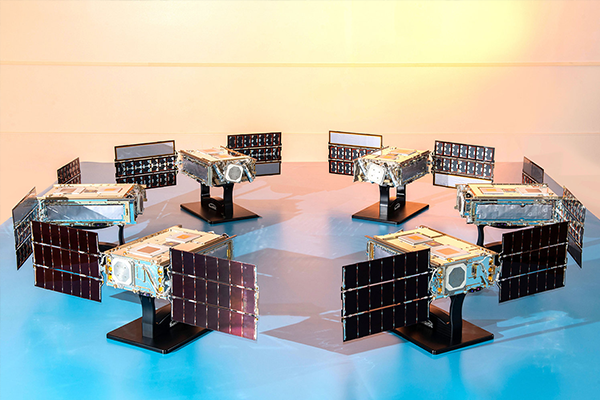
In January, NASA selected the final investigations for the Geospace Dynamics Constellation (GDC) Mission. The two investigations for the flagship mission include the Thermal Plasma Sensor and NEMISIS (Near Earth Magnetometer Instrument in a Small Integrated System), led by University of Michigan Prof. Mark Moldwin.
A new laboratory is coming to the U-M Department of Climate and Space Sciences and Engineering, slated to be completed by 2024. Named the Leinweber Space Innovation Laboratory, the lab will support space research, mission planning and learning.
An upcoming SpaceX Falcon 9 resupply mission to the International Space Station will carry more than Tang for the astronauts. The November launch also carries a cubesat created by University of Michigan Master’s students.
Three former and current medical students discuss the unique courses they helped develop for their peers and future generations of physicians-in-training.