SPAR Set Its Sights on the Future of the Institute

SPAR meeting
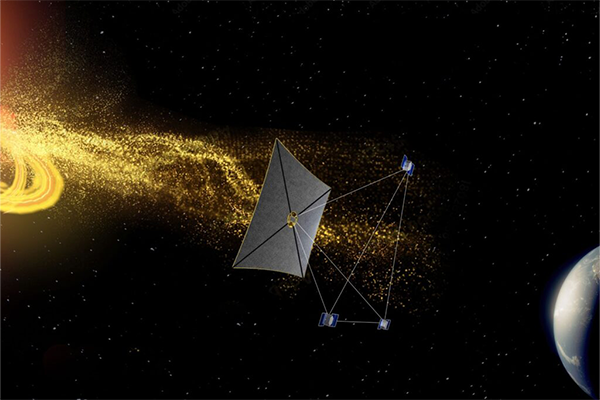
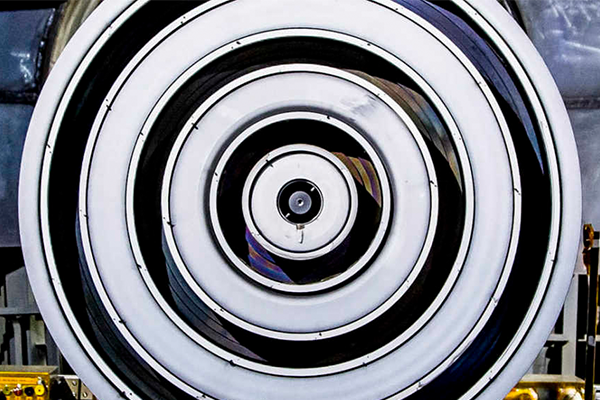
The SPAR Institute was formed to develop spacecraft that can “maneuver without regret,” with funding from the U.S. Space Force, and is set to bring fast chemical rockets together with efficient electric propulsion powered by a nuclear microreactor. As the eight universities and 14 industry partners and advisers come together to tackle the initiative, the SPAR Institute is now one of the nation’s largest efforts to advance space power and propulsion.

Small, Faint and ‘Unexpected in a Lot of Different Ways’: U-M Astronomers Make Galactic Discovery

galaxy
A discovery made by a team led by researchers at the University of Michigan tugs at the seams of some key cosmic lessons we thought we had learned from our own galaxy. This dwarf galaxy, named Andromeda XXXV and located roughly 3 million light-years away, is forcing astronomers to rethink how galaxies evolve in different cosmic environments and survive different epochs of the universe.

U-M Awarded up to $7.5M to Bring Heat-Tolerant Semiconductors From Lab to Fab

silicon chip
Heat-resistant sensing and computing chips made of silicon carbide could advance aircraft, electric and gas-powered vehicles, renewable energy, defense and space exploration—and University of Michigan researchers are leading a multimillion dollar collaborative effort to bring more of them to market. Funded by the Silicon Crossroads Microelectronics Commons Hub, the project is launching with $2.4 million in initial funding, and could receive up to $7.5 million over three years.

U-M Astronomy Will Lead Its First Satellite Mission With NASA Grant

STARI
The first space mission led by the University of Michigan Department of Astronomy is scheduled to launch in 2029 with the support of a NASA grant worth $10 million. The mission is called STARI—STarlight Acquisition and Reflection toward Interferometry—and will showcase the viability of a new technique for studying exoplanets, or planets outside of our solar system.

Witnessing the Birth of Planets

planets
University of Michigan researchers contributed to an international collaboration that’s providing an unparalleled view into how planets are born using the JWST—the most powerful space telescope ever launched. In particular, the team studied PDS 70, a young star with two growing planets in its orbit. Located 370 lightyears away, this system gives scientists a rare chance to see how planets form and evolve during their earliest stages of development.

Leinweber Lab Becomes Design Hub for Moon Garden Equipment

Leinweber Lab
If you walk by the new Leinweber Innovation Lab inside the Climate & Space Research Building on a Wednesday evening, you might notice the BLiSS student team hard at work in each of the lab’s studios. There, members of their subteams are working in parallel to design tools that could help solve challenges in NASA’s future Artemis missions to the moon.
The lab’s four open studio spaces were the perfect fit for the BLiSS student team to help future moon missions.