Smithsonian National Air and Space Museum Features CYGNSS Mission Led by University of Michigan

RTX Space Age Exhibit
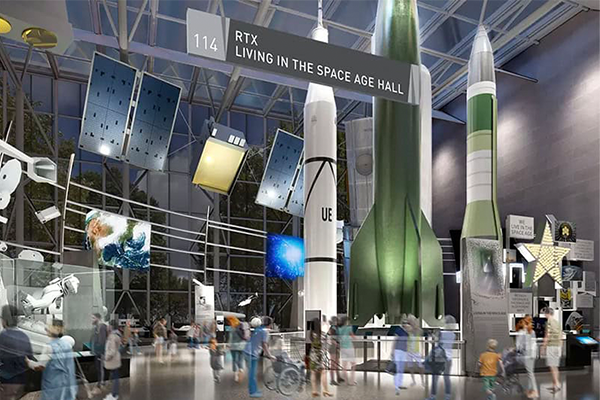
The CYGNSS Mission led at the University of Michigan will be exhibited in the Smithsonian National Air and Space Museum in July. The museum will feature a replica of NASA’s CYGNSS mission in the “RTX Living in the Space Age Hall.” Named the Cyclone Global Navigation Satellite System, CYGNSS was developed at the University of Michigan’s Space Physics Research Laboratory (SPRL) and the Department of Climate and Space Sciences and Engineering (CLASP).

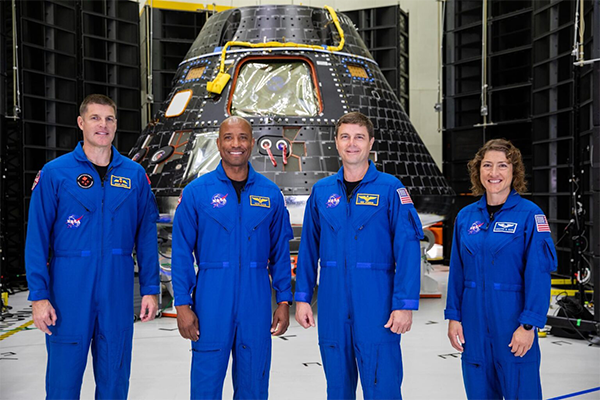
“NASA is Testing an AI Model to Protect Artemis II Astronauts from Solar Radiation”

Lulu Zhao, assistant professor of climate and space sciences and engineering, and principal investigator of U-M’s CLEAR Center was featured on Earth.com in the article “NASA is Testing an AI Model to Protect Artemis II Astronauts from Solar Radiation.” The article discusses how the CLEAR Center is providing forecasts of dangerous solar radiation Continue Reading »

“Astronomers Discover Dozens of Stellar Streams in the Milky Way”

In an article for earth.com, Yingtian Chen, a graduate student at the University of Michigan Department of Astronomy, discusses his study on stellar streams and how they help astronomers reconstruct the Milky Way’s past and understand the galaxy’s gravitational structure. He was interviewed in the article “Astronomers discover dozens of stellar streams in the Continue Reading »

NASA’s SunRISE SmallSats Ace Tests, Moving Closer to Launch

SUNRISE tests
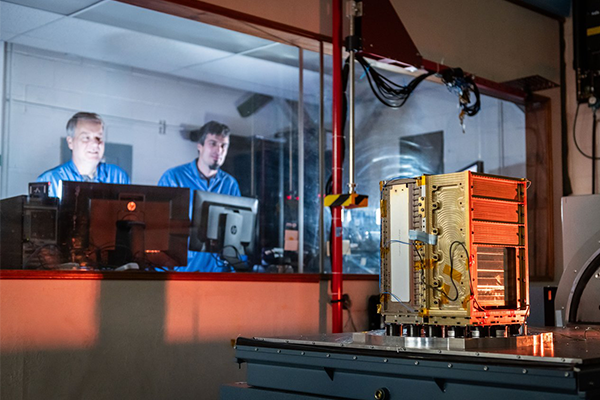
In a mission led by Principal Investigator Professor Sue Lepri, Ph.D., who works as the Director of the Space Physics Research Laboratory, six small satellites (or SmallSats) are moving closer to launch in the Sun Radio Interferometer Space Experiment (SunRISE) Mission. Under the management of NASA’s Jet Propulsion Laboratory, this mission will study the physics of explosions in the Sun’s atmosphere in order to gain insights that could one day help protect astronauts and space hardware from showers of accelerated particles.