
NASA’s Cyclone Global Navigation Satellite System (CYGNSS)
Launched by NASA in 2016, the Cyclone Global Navigation Satellite System (CYGNSS) Mission, set the standard for small satellite constellations in orbit, transforming the way scientists design new missions to space. The mission was conceived, designed, and implemented by faculty and students at the University of Michigan Department of Climate and Space Sciences and Engineering and by engineers in U-M’s Space Physics Research Laboratory, working in collaboration with the Southwest Research Institute, Surrey Satellite Technology Ltd., and other subcontractors.
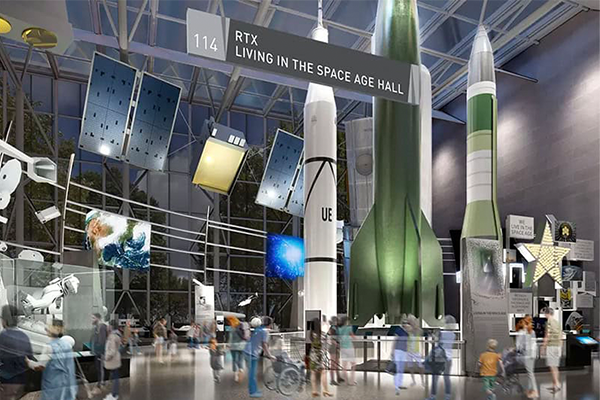
Smithsonian National Air and Space Museum Features CYGNSS Mission Led by University of Michigan!
Developing CYGNSS at the University of Michigan
Led by Principal Investigator Dr. Chris Ruf at the University of Michigan, the CYGNSS mission has been instrumental in pioneering a new era of spacecraft design. The technology has been replicated for new Earth science missions by both government agencies and private industries around the world.
Improving Hurricane Forecasts
This NASA satellite mission uses instruments in orbit above the tropics to understand the formation and intensity of tropical cyclones and hurricanes, advancing our ability to issue accurate hurricane forecasts.
Tracking Harmful Ocean Microplastics
CYGNSS-tracked patterns of the ocean surface strongly correlate with patterns of microplastics, helping scientists locate harmful pollutants in our oceans.
Studying Climate on Commercial Aircraft
The CYGNSS mission partners with NASA and Air New Zealand to improve forecasting of flash floods and to better understand how climate change impacts New Zealand.
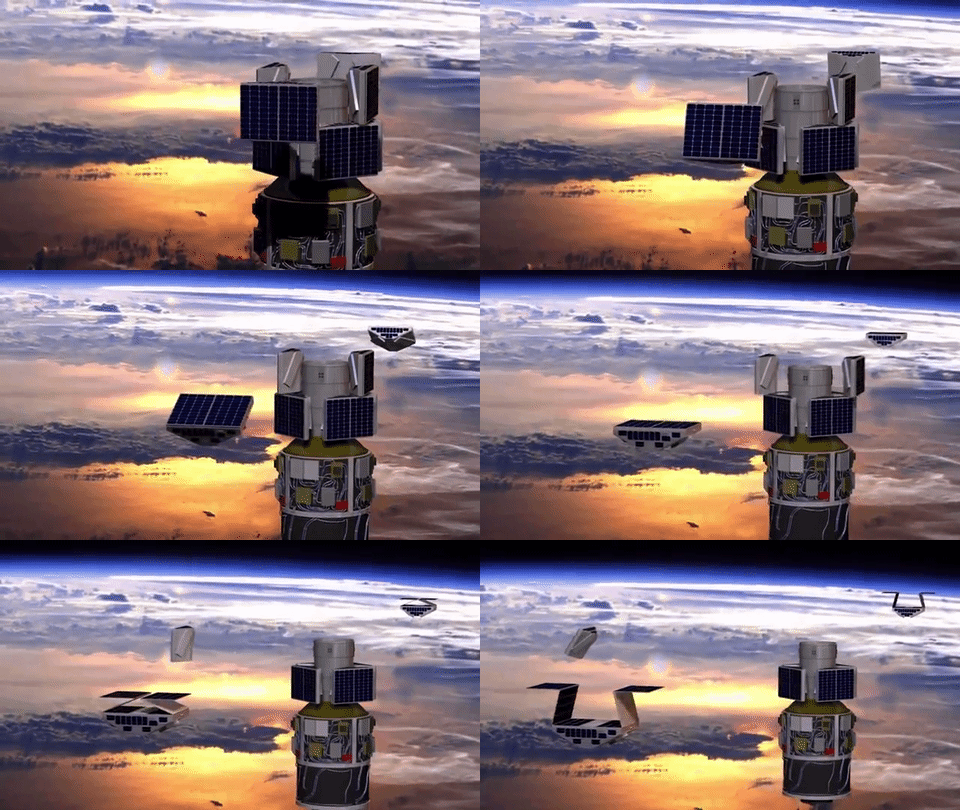
Simulation of CYGNSS micro-satellite constellation being deployed into low Earth orbit from the third stage of the launch vehicle.
Fighting Wildfires.
Detecting Ocean Microplastics.
Predicting Climate Change Impacts.
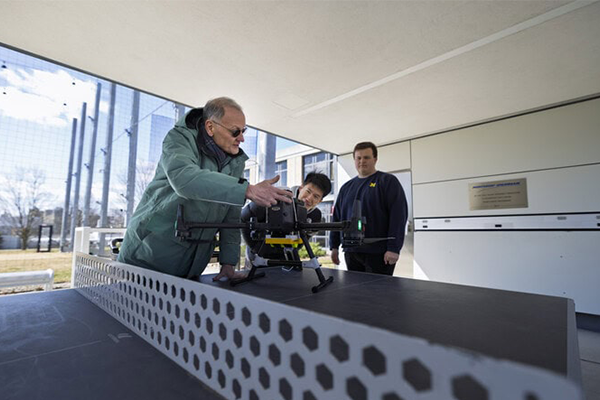
FireSat Transforms Wildfire Detection
Remote-sensing technology designed for the CYGNSS mission at the University of Michigan inspires tools to help fight wildfires from space. More
Garnering The Ocean Award for Science
Professor Chris Ruf and University of Michigan student Madeline Evans win an Ocean Award for detecting microplastics in the ocean using CYGNSS. More
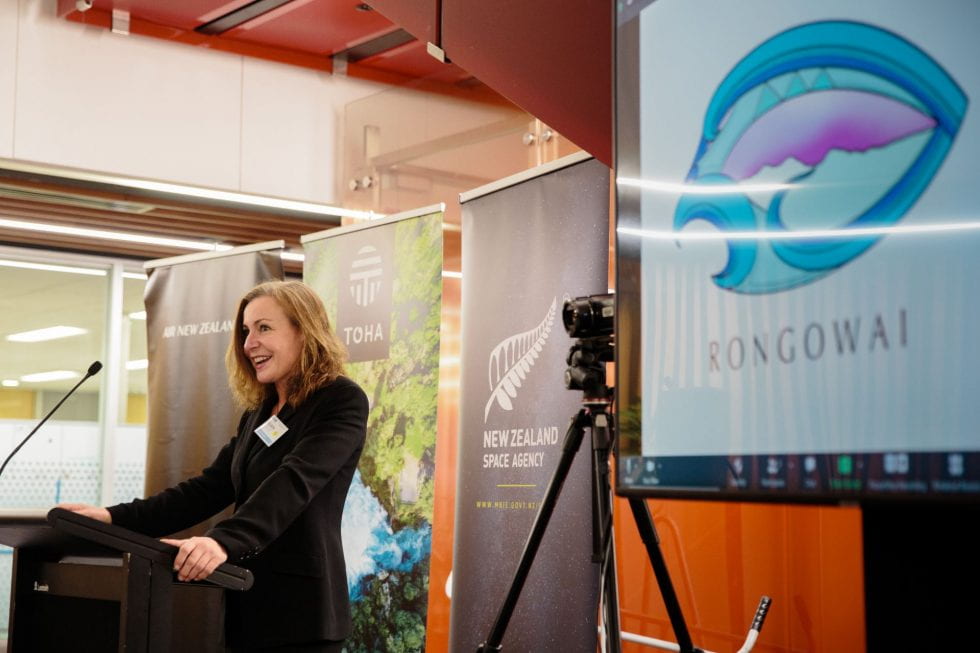
Air New Zealand Flies CYGNSS Technology
A commercial plane in New Zealand is fitted with receivers that will validate CYGNSS data and improve interpretation, aiming to predict climate change. More
Featured in the Documentary Film ‘Plastic Earth’
Dr. Chris Ruf and the work of the CYGNSS mission have been featured in the documentary film “Plastic Earth.” Ruf also appears in the trailer for the full-length documentary film.

Scientists and engineers gather in the Space Physics Research Laboratory at the University of Michigan to mark the success of CYGNSS. 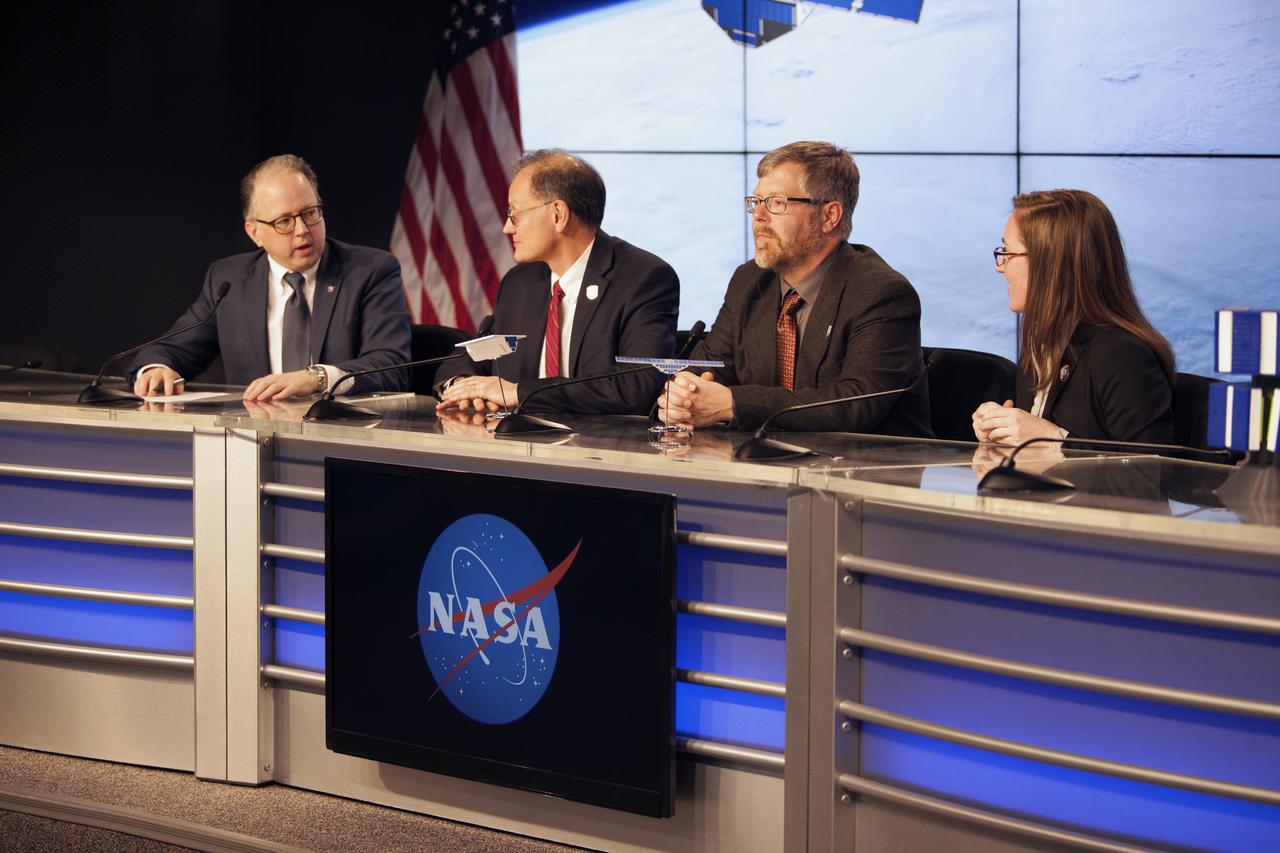
A news conference is held at NASA in advance of the CYGNSS launch in 2016. Photo courtesy of NASA. 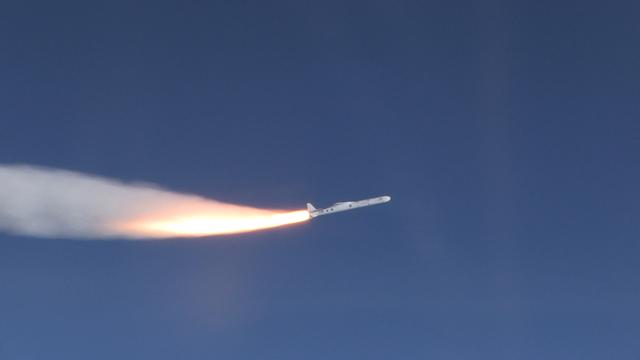
The CYGNSS mission launches aboard the Orbital ATK Pegasus XL rocket. Photo courtesy of NASA. 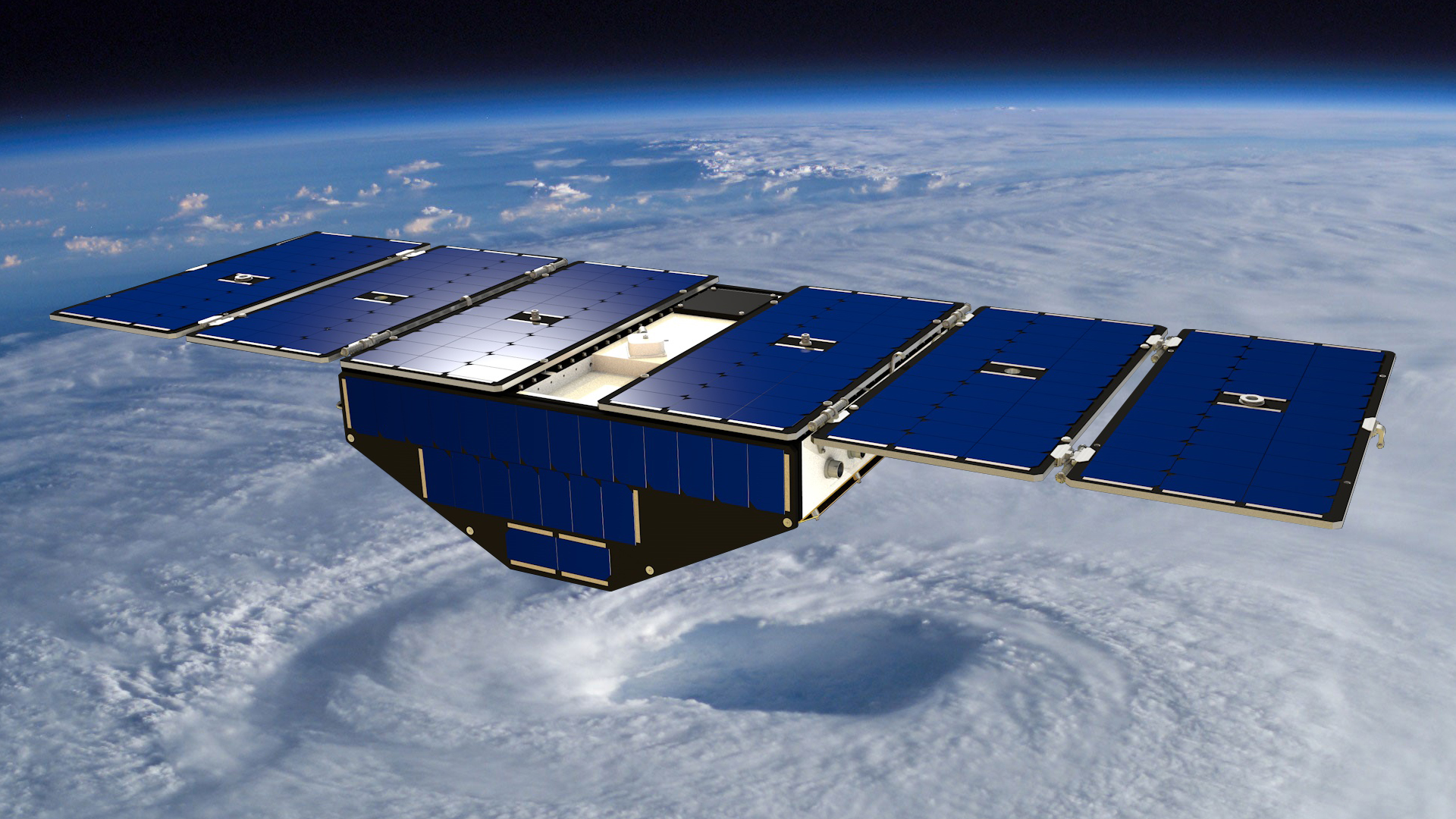
An artist’s rendering illustrates the CYGNSS mission in orbit above hurricanes. 
P.I. Chris Ruf, a professor at the University of Michigan, speaks ahead of the CYGNSS mission launch in 2016. Photo courtesy of NASA. 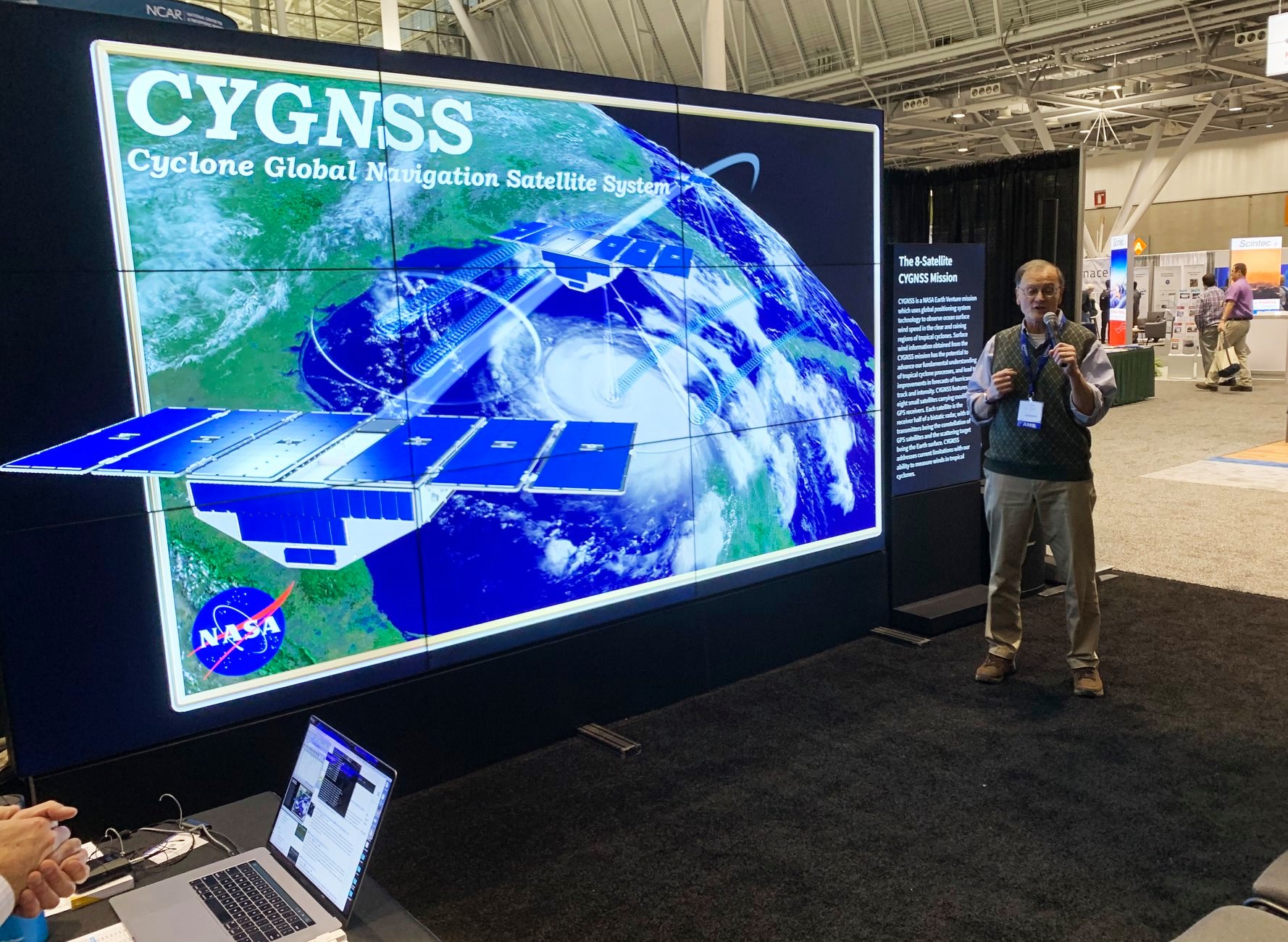
P.I. Chris Ruf, who also served as Director of the U-M Space Institute, presents on CYGNSS to the scientific community. Photo courtesy of NASA.
Our Work at the University of Michigan
Meet the teams behind the CYGNSS mission and discover the resources that led to this feat in engineering. Our work on this mission is made possible in collaboration with scientists around the world, NASA and the Southwest Research Institute.
Space Physics Research Lab
With more than 75 years of experience in space, the Space Physics Research Laboratory helps scientists study the most forbidding environments.
U-M Climate & Space
The U-M Department of Climate and Space Sciences and Engineering educates future engineers to advance our understanding of Earth and Space.
U-M Engineering Labs & Facilities
A top research university, U-M offers state-of-the-art labs for space research, nano-fabrication, hydrodynamics, radiation effects in materials and material characterization.